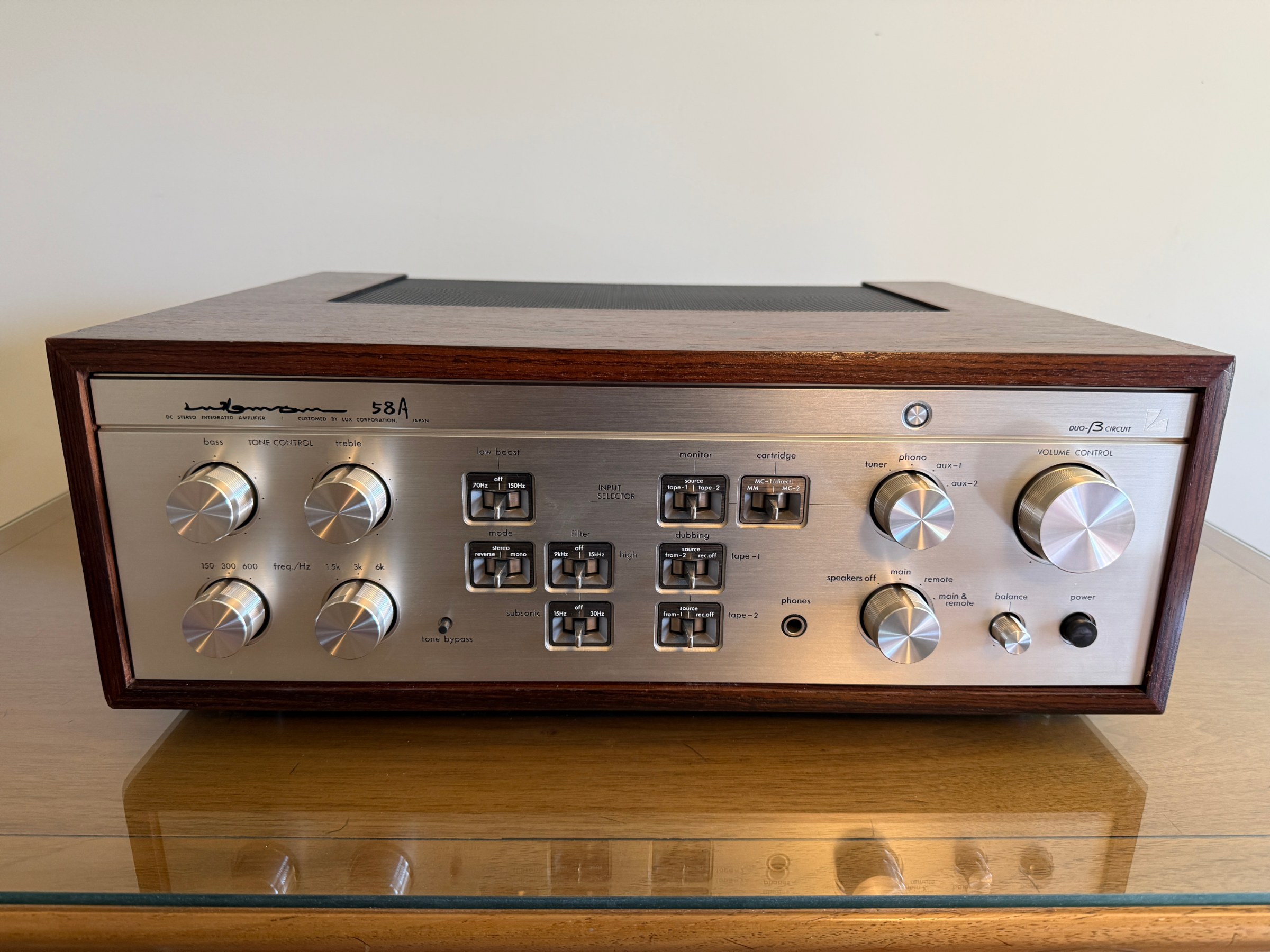
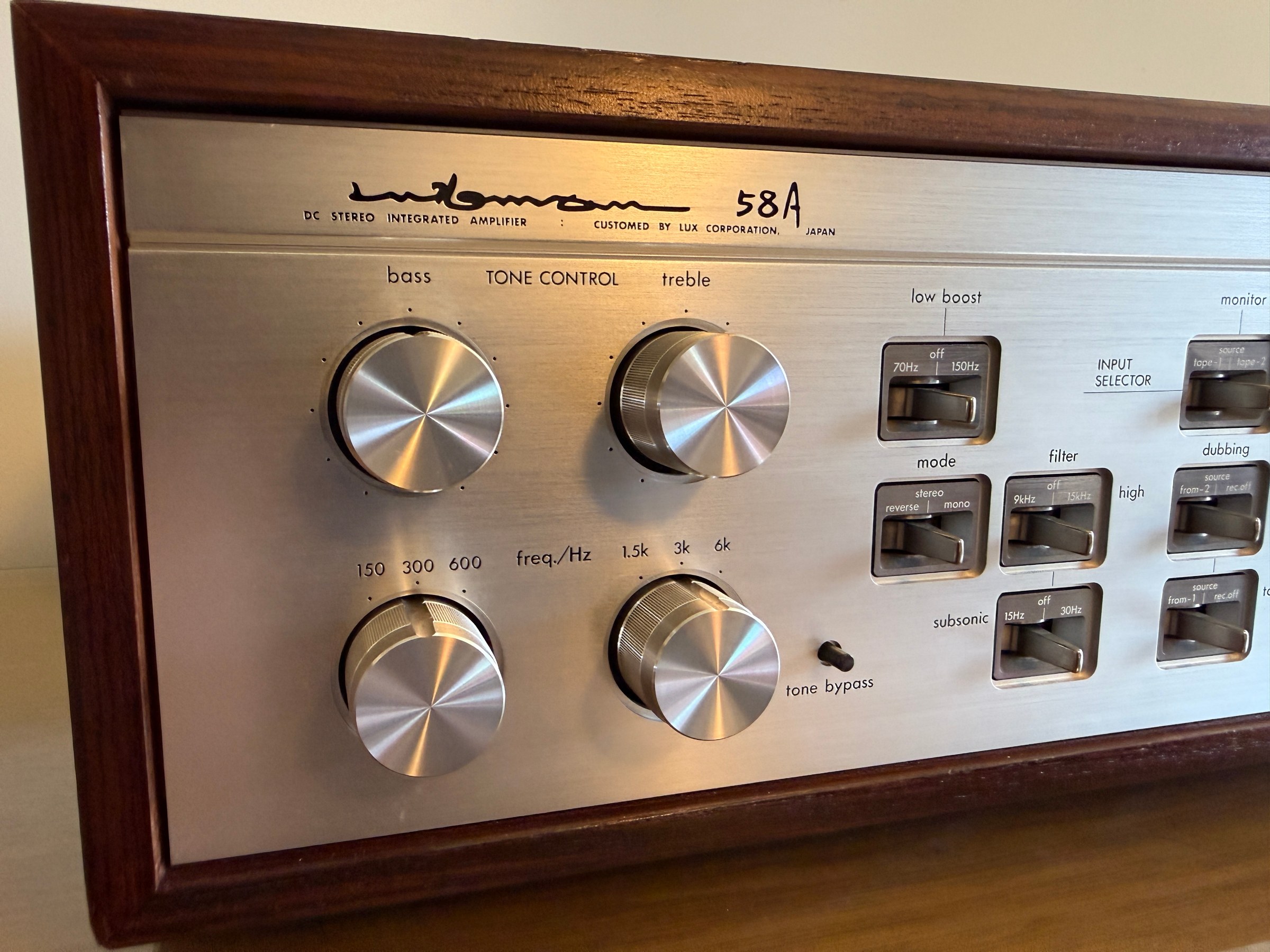
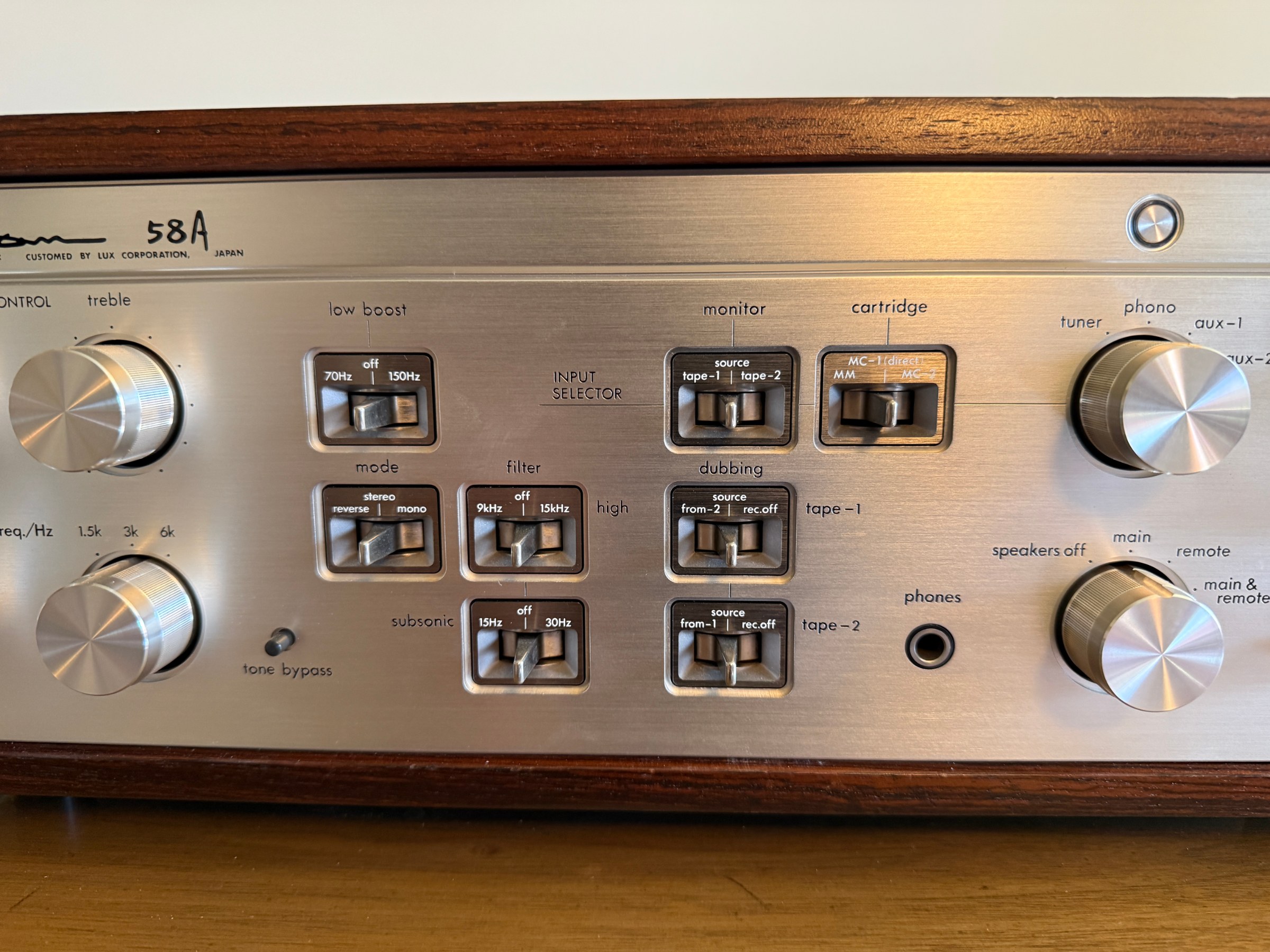
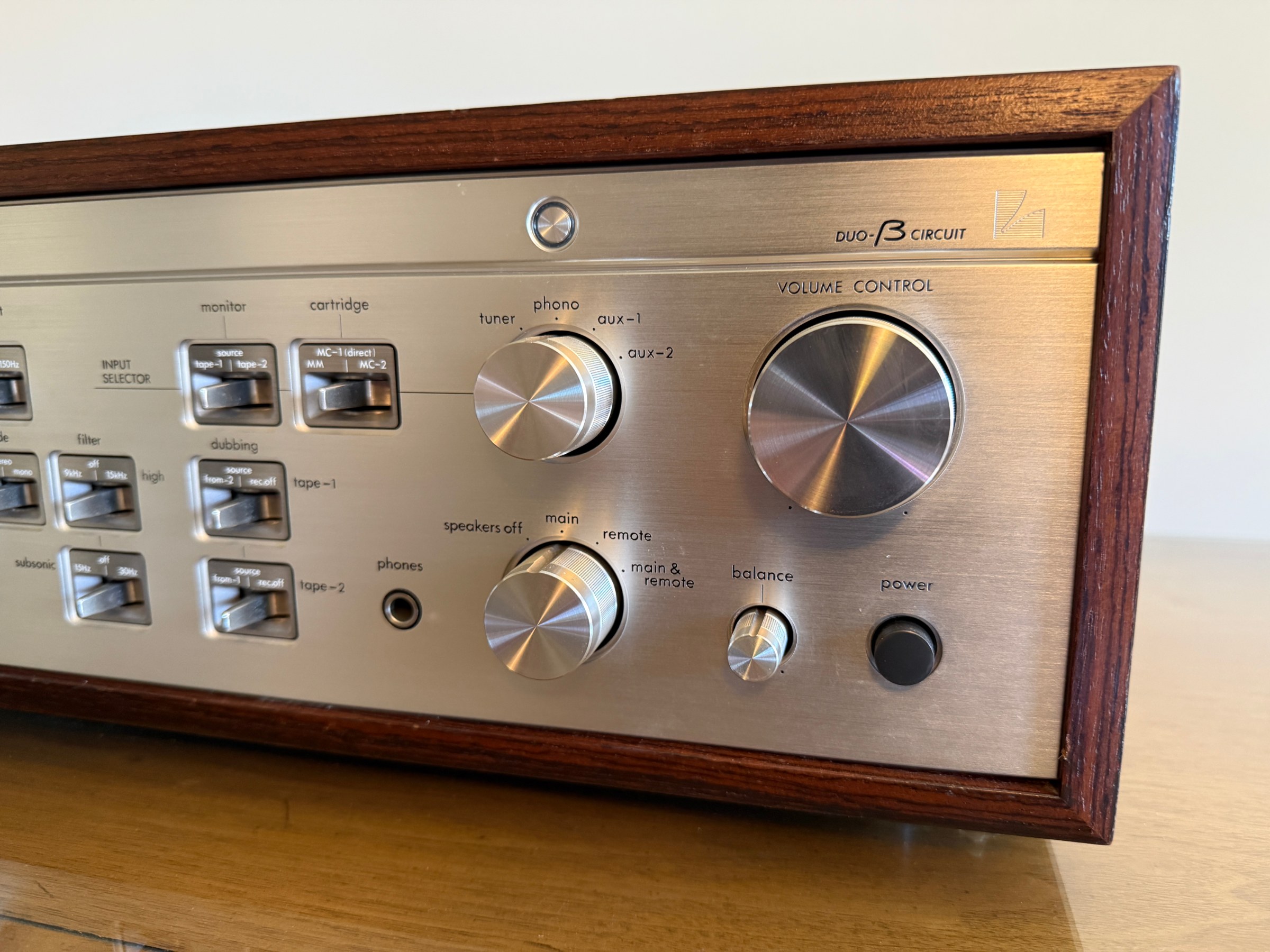
Restoration notes
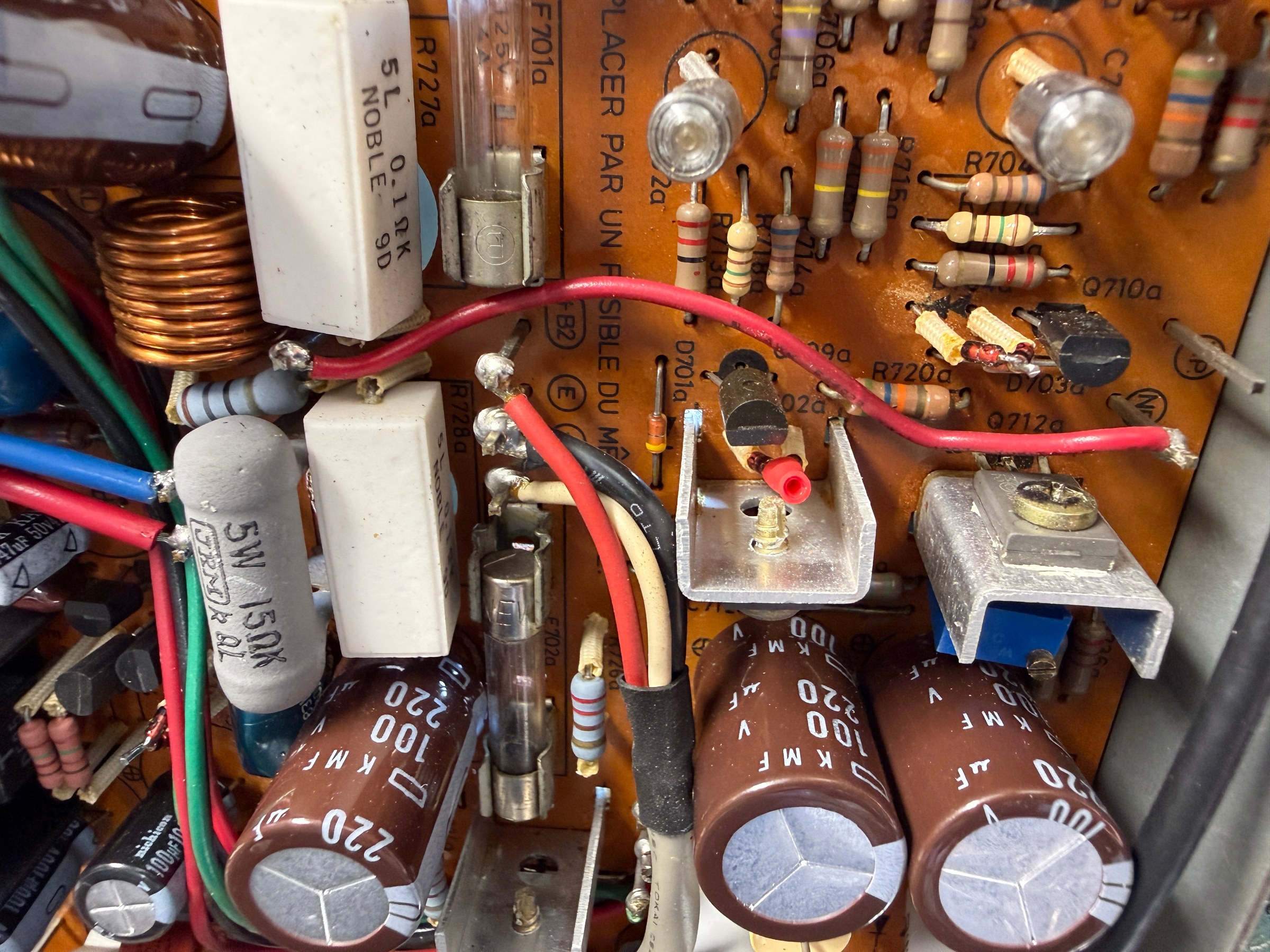
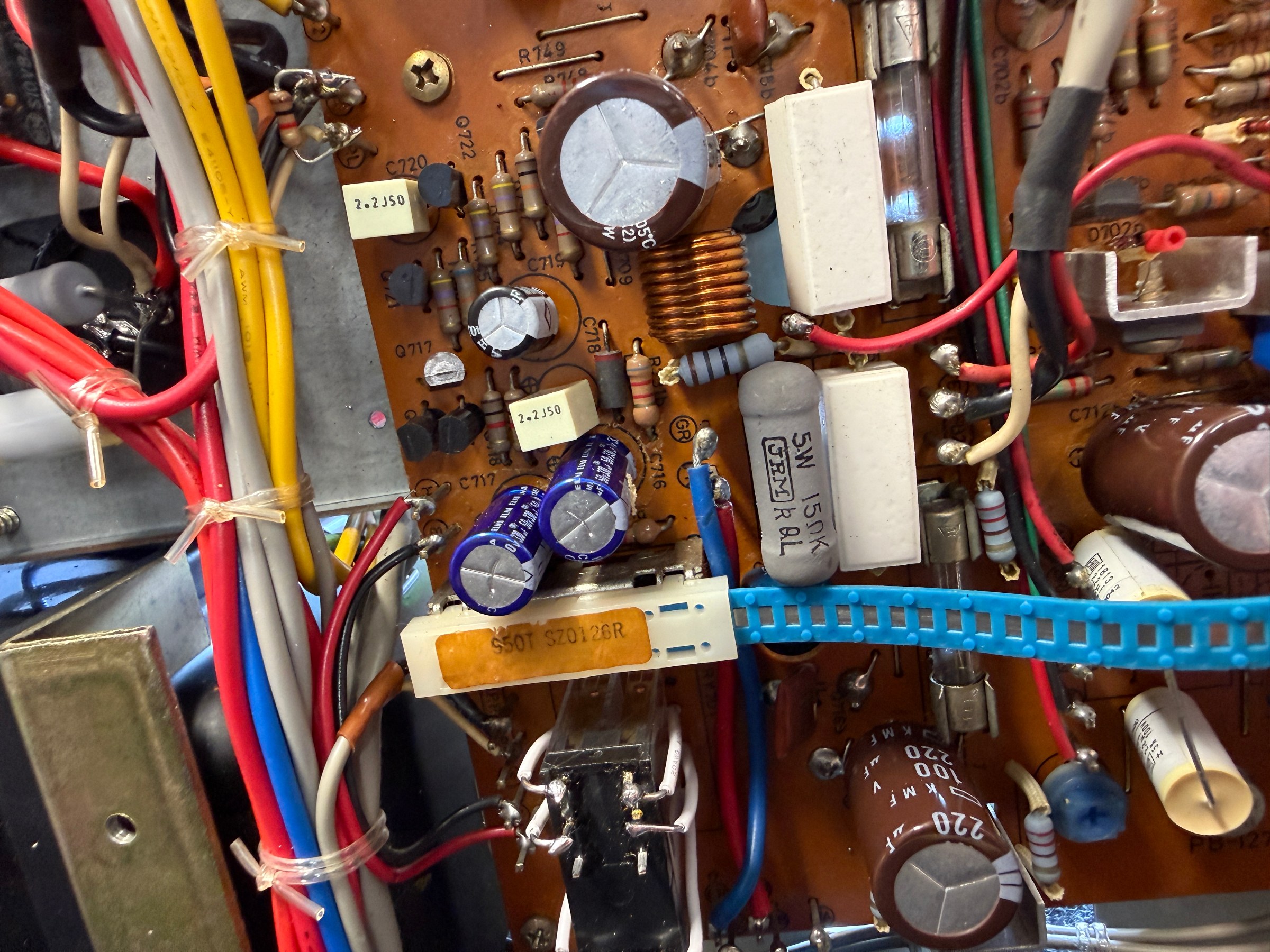
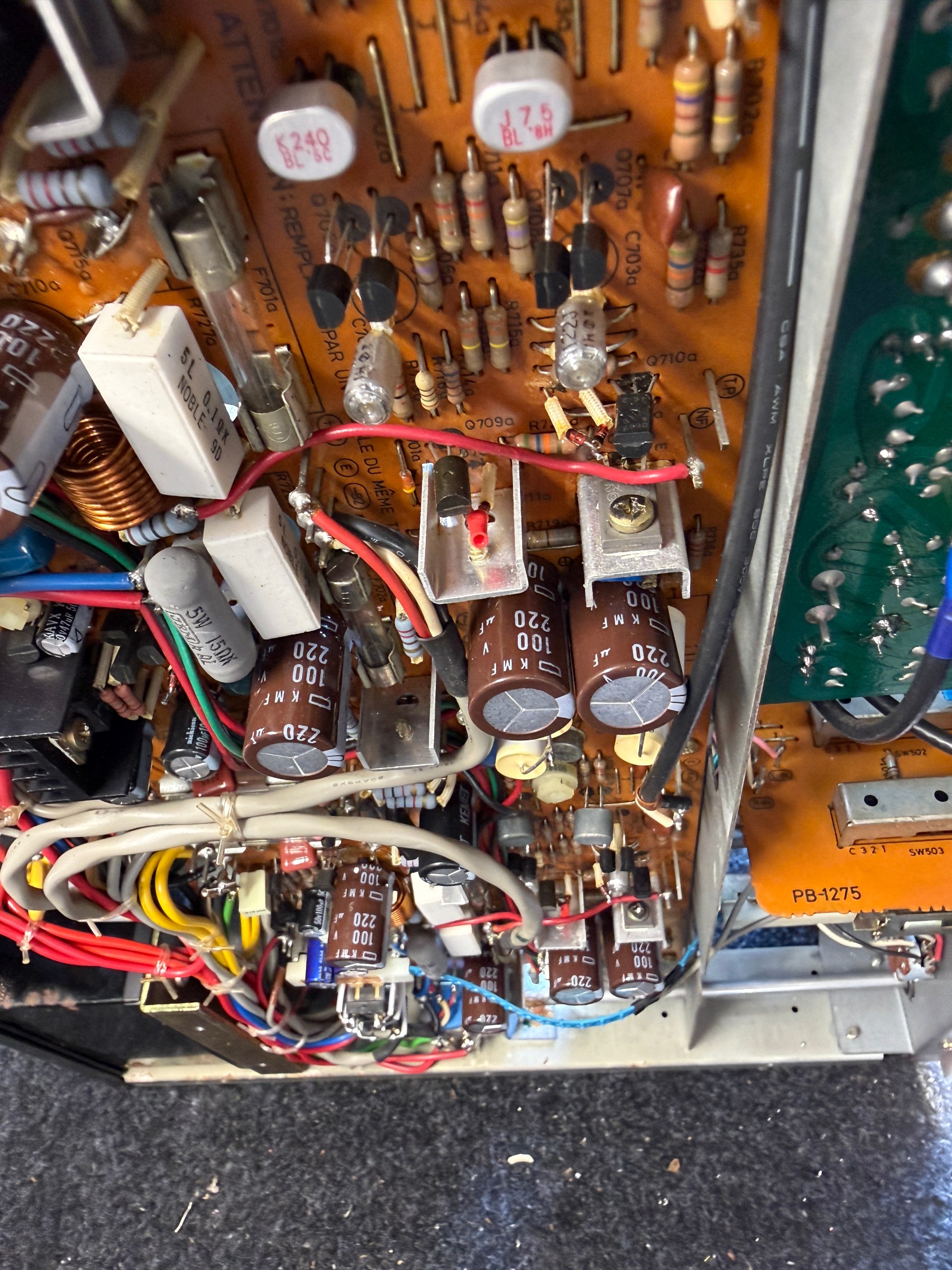
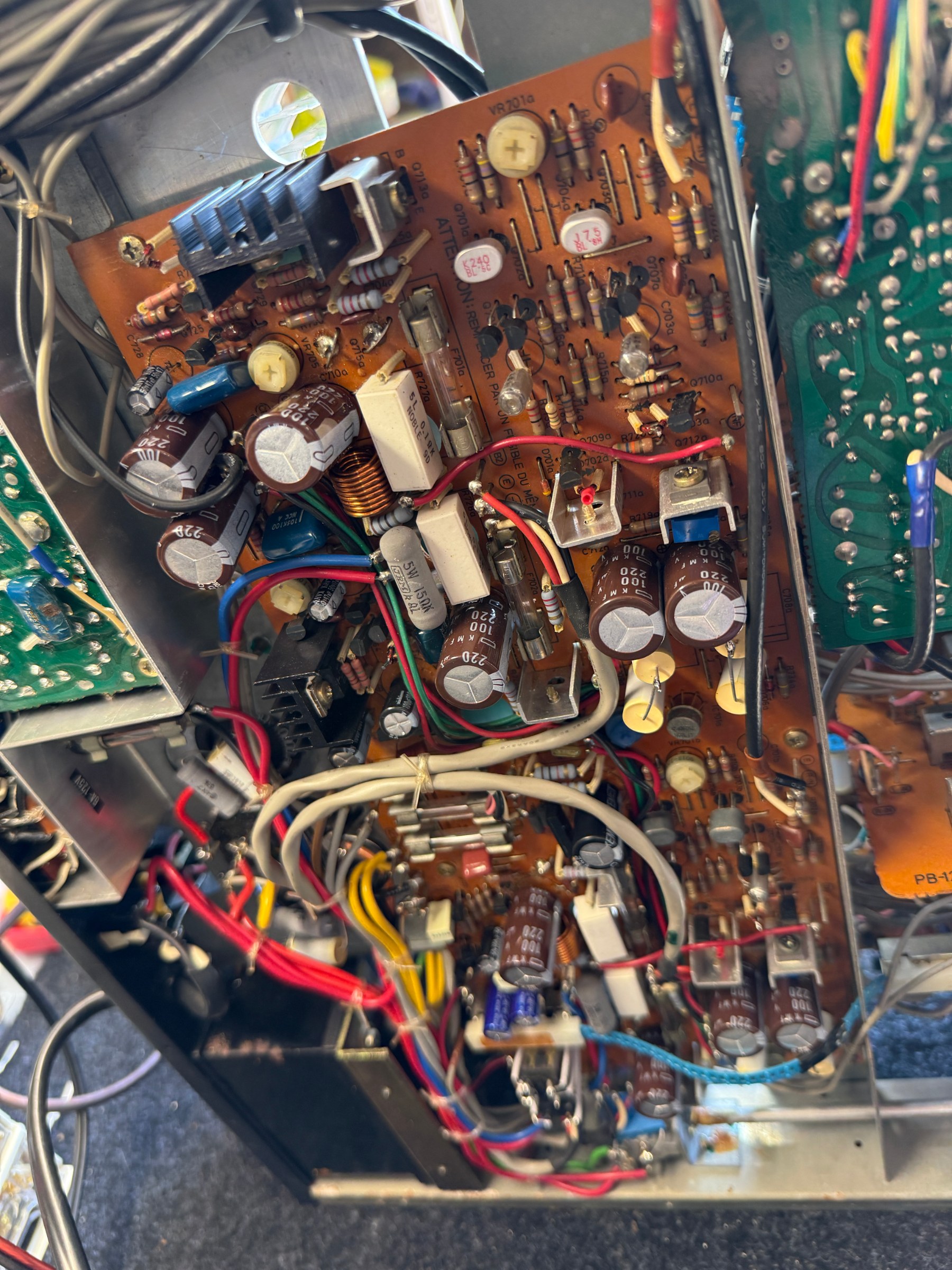
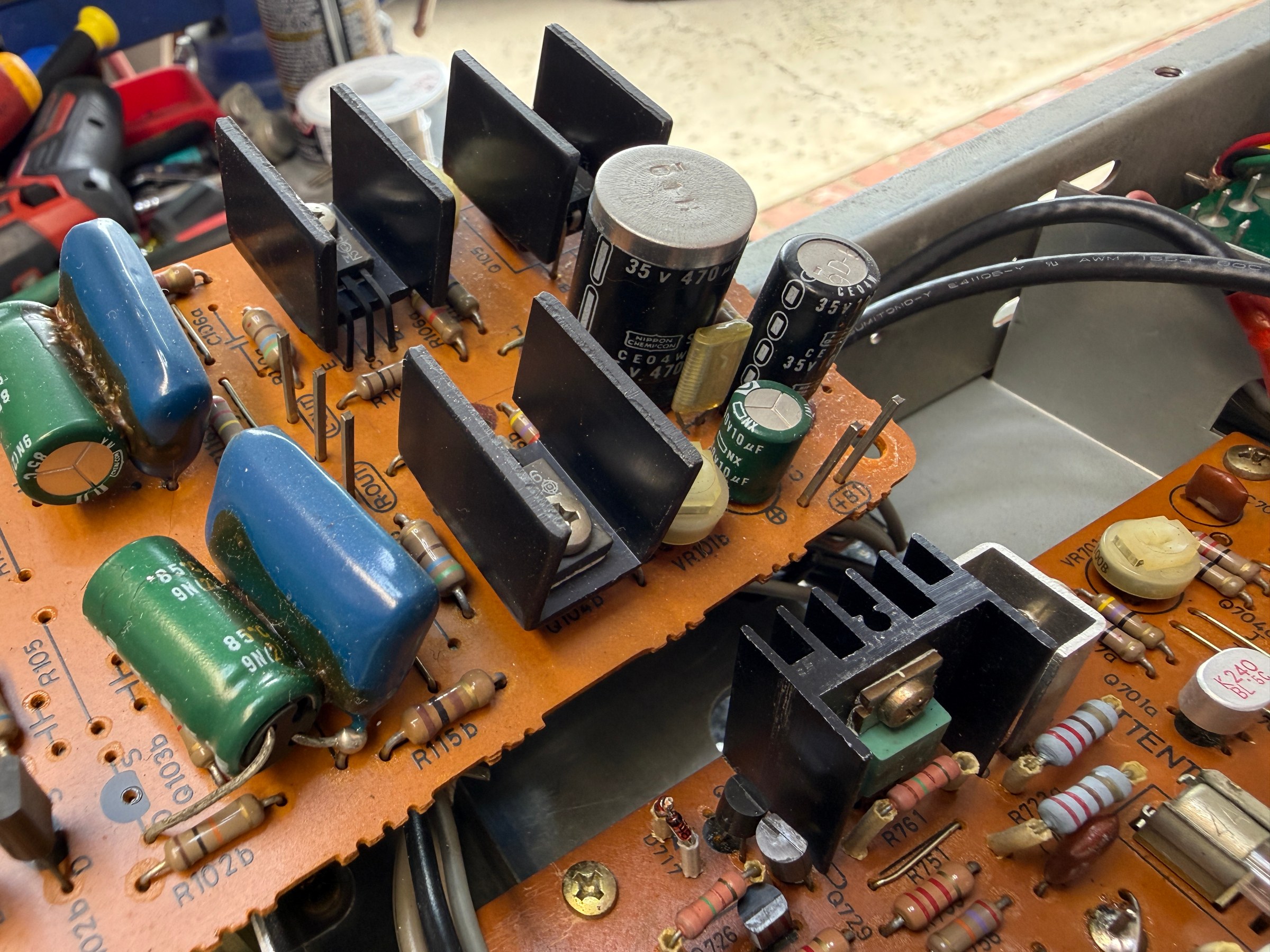
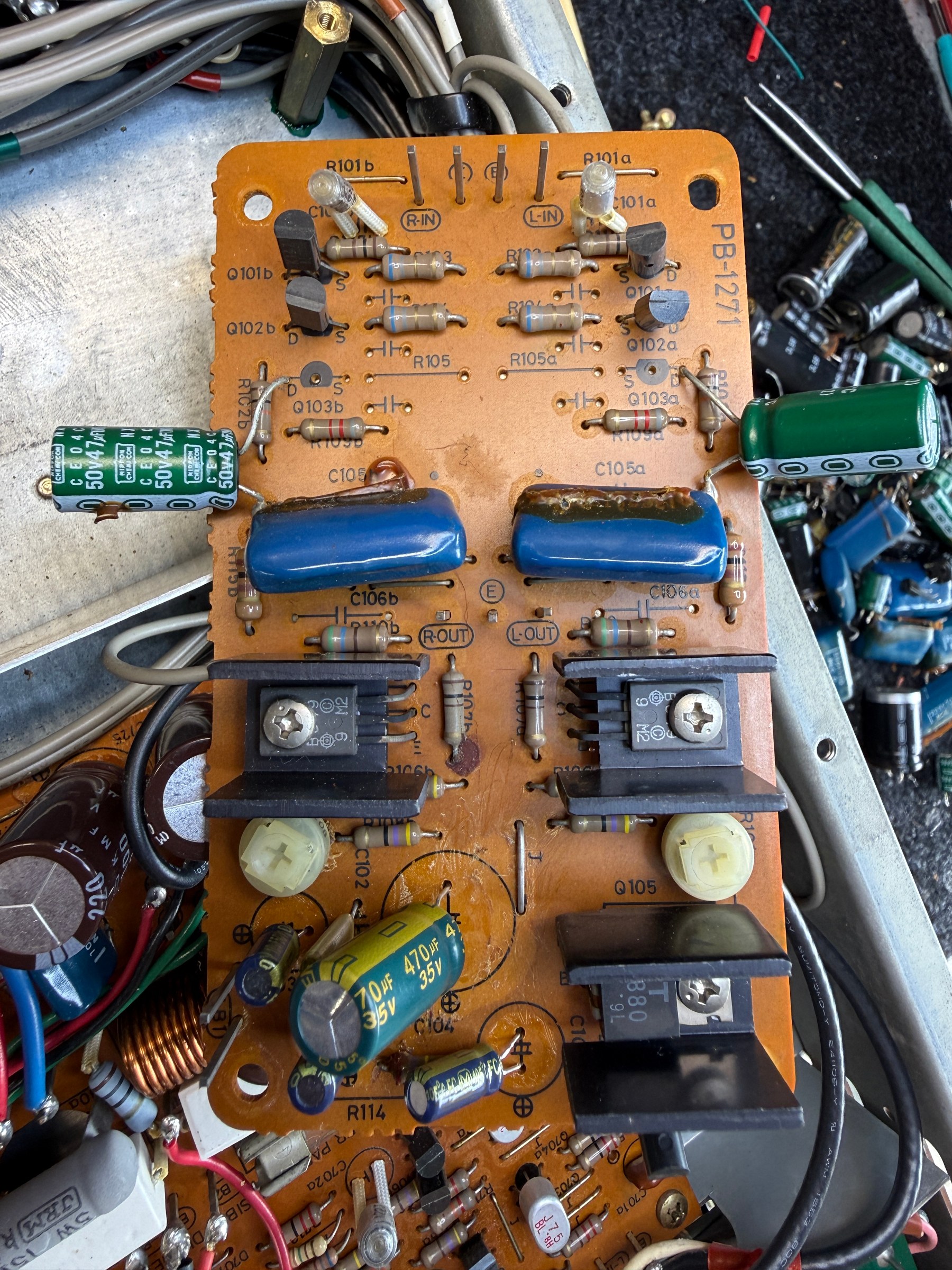
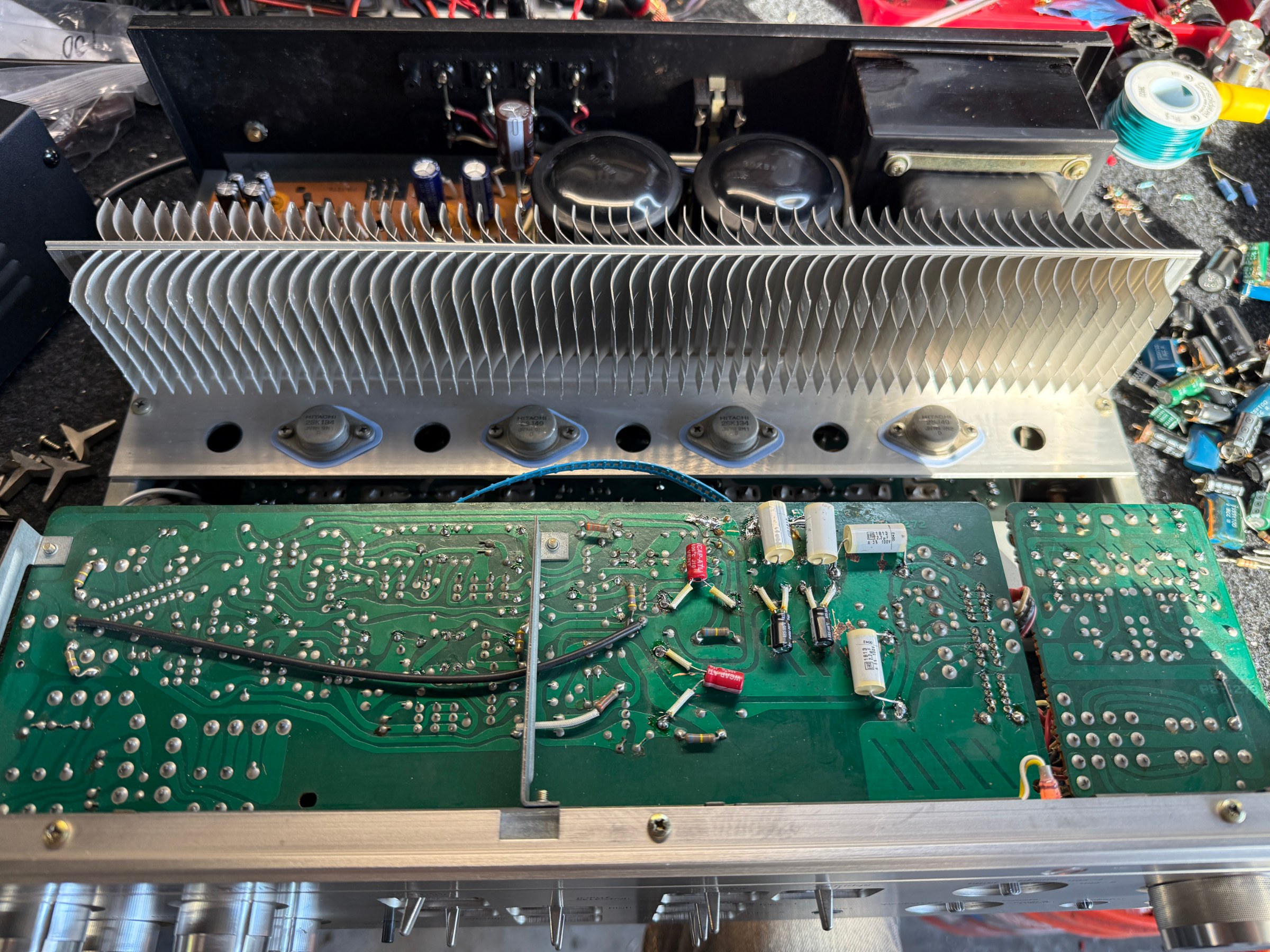
Every electrolytic capacitor throughout the amplifier has been replaced using premium components from Nichicon, Panasonic, KEMET, and WIMA, selected for their proven reliability and electrical consistency. Known age-related semiconductor devices were replaced where appropriate using carefully selected modern low-noise equivalents. Critical differential devices were matched between channels to preserve balance and long-term stability. The original Hitachi 2SK134 / 2SJ49 lateral MOSFET output devices—one of the defining characteristics of the L-58A—were removed, tested, cleaned, and reinstalled using new thermal compound and fresh insulating pads. The main filter capacitors were rebuilt using modern high-reliability capacitors while retaining the original factory housings, preserving the amplifier's original appearance. Every adjustable potentiometer within the amplifier section has been replaced with sealed multi-turn precision trimmers, allowing far more precise calibration than the original open-frame components. Thermal & Reliability Improvements One area often overlooked during restoration is thermal management. Although the L-58A is an outstanding amplifier, experience has shown that several areas benefit from modest improvements that reduce localized operating temperatures without altering the original circuit design. To improve long-term reliability, the following conservative enhancements were implemented: Higher-mass heatsinks installed on the driver transistors Additional heatsinking added to the DC servo ICs (IC701A/B) All thermal interface materials renewed throughout the amplifier These improvements were made solely to improve long-term thermal stability while preserving the amplifier's original operating characteristics. Calibration Following restoration, the amplifier was allowed to reach full operating temperature before final calibration. Idle current was adjusted using direct emitter resistor measurements rather than relying solely on factory reference values. DC offset was carefully adjusted and verified after extended thermal stabilization to ensure the amplifier remains stable from a cold start through full operating temperature. Verification & Testing Every stage of the restoration was followed by extensive verification, including: Extended thermal soak testing Output device thermal matching verification Extended music playback evaluation Stability monitoring from cold start through full operating temperature Throughout testing, the amplifier exhibited no measurable drift, oscillation, or thermal instability. Performance The L-58A has long been regarded as one of Luxman's finest integrated amplifiers because it emphasizes refinement rather than sheer force.